


👋 Hi, it’s Zdenko, welcome to 113 new readers since last edition.
Seedstrapped is newsletter about funding and building profitably growing SaaS businesses in the age of AI. If you’re new here, start with some of the most-read issues:
Seedstrapping: The Smarter Way to Fund Your Startup in 2025?
Seedstrapping Success Stories: From $500k Raises to 8-Figure Exits
7 Underrated Cold Outreach Tactics for Seedstrapped Founders
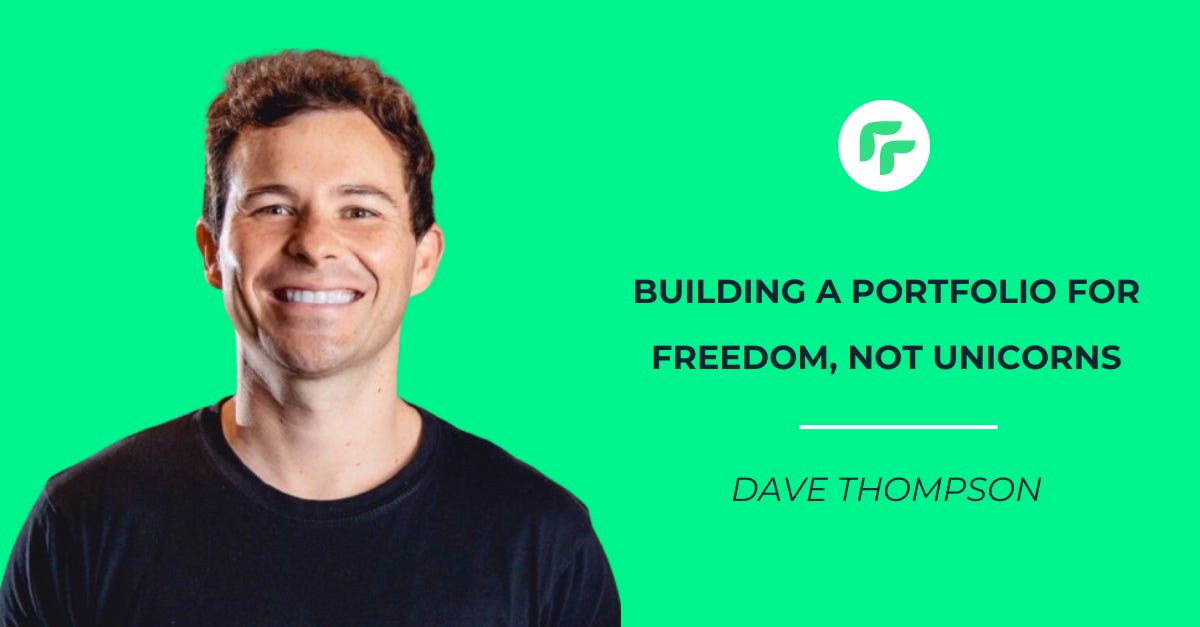
After more than a decade building Hometime into a market-leading Australian short-term rental operator, Dave Thompson has shifted his focus from operating a single venture-backed company to assembling a portfolio of capital-light, cash-generative businesses under the Freedom Ventures banner.
I sat down with Dave to learn about his journey and plans he has with Freedom Ventures.
Here are the key themes that emerged from our chat.
1. The venture treadmill delivers scale, but not necessarily founder liquidity
Hometime’s journey was a familiar one: raise venture capital, pursue national leadership, hire aggressively and expand into adjacent markets. This however comes at the expense of dilution, notwithstanding that taking on venture capital funding was a big enabler in owning a smaller percentage of a much larger pie.
Whilst Venture capital is a powerful instrument for expansion, as part of his next endeavour, Dave has been deliberate about profitability, dividends and optionality as an alternative pathway to explore.
2. Roll-ups as a disciplined shortcut to scale
The post-COVID phase of Hometime’s evolution was defined less by organic expansion and more by acquisitions. With proprietary technology and operating infrastructure already in place, the company began acquiring smaller, often long-standing competitors in a fragmented market.
One early transaction added roughly A$1m of EBITDA at a multiple of around 1.5x. For Dave, this demonstrated how, once a platform exists, buying earnings can be more efficient than building them.
Roll-ups are not a universal solution, but in markets with numerous sub-scale operators and predictable economics, they can compress time to scale dramatically.
3. Knowing when to step back from the CEO role
Around year six to seven, Dave realised his comparative advantage lay in the zero-to-one phase: rallying small teams, finding product-market fit and constructing the initial operating system. The later stages - larger organisations, layers of management, more formal governance - were less aligned with his skills and energy.
This self-assessment ultimately led him to transition out of the CEO role, remain a shareholder and board member and free himself to pursue a portfolio approach.
It is a useful reminder that “founder for life” is not always optimal for either the individual or the company.
4. Freedom Ventures: capital-light and distribution-led
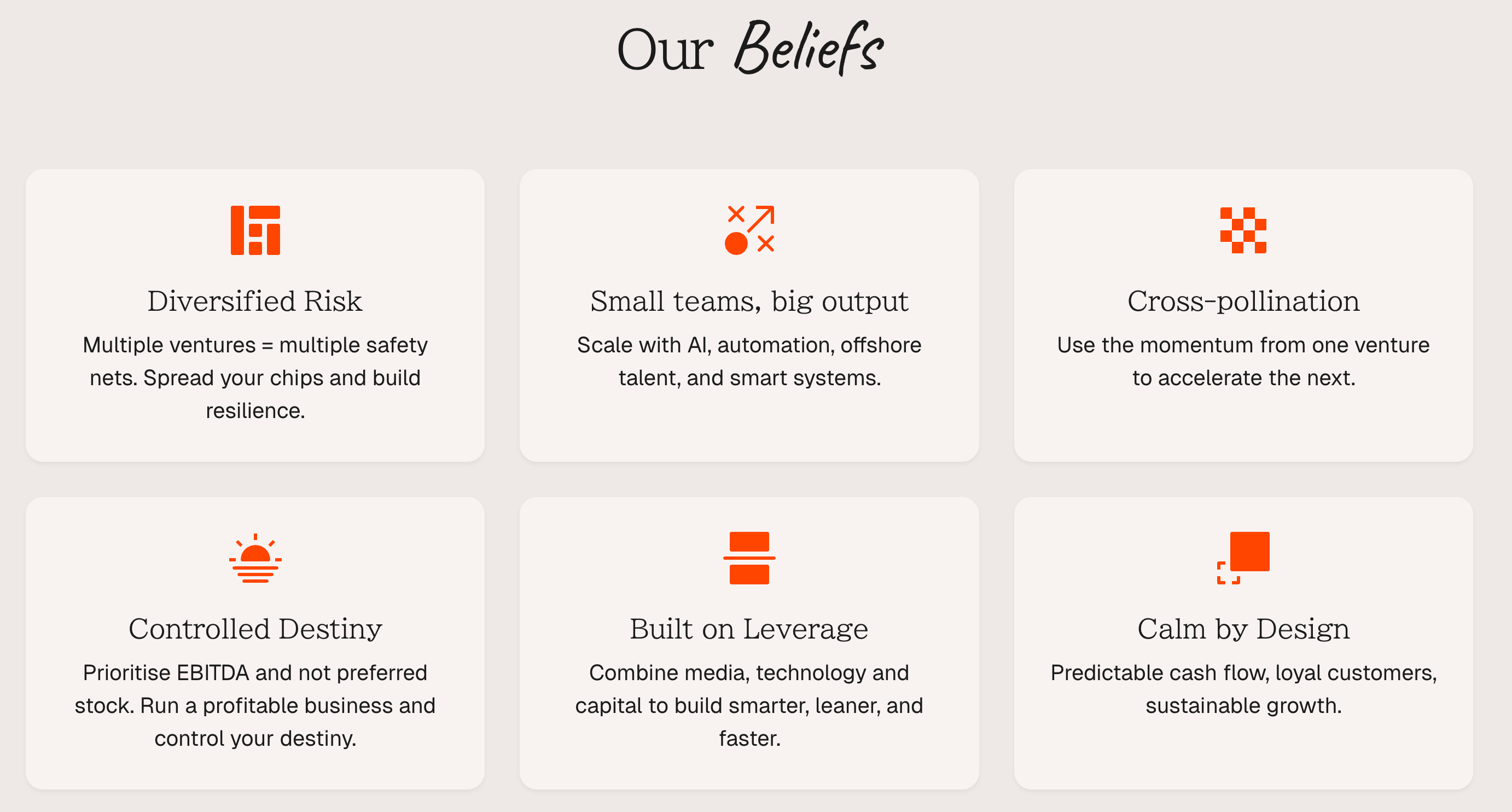
Dave’s new platform, Freedom Ventures, officially launched this year. Inspired by leading HoldCos and venture studios (including Andrew Wilkinson’s Tiny) the model is a hybrid: part company builder, part long-term owner and explicitly designed as a seedstrapped alternative to venture capital.
The strategy consists of 3 key components:
Seedstrapped incubation
Build 0-to-1 businesses in categories where Dave has edge, leveraging shared distribution, offshore talent and AI to keep teams lean from day one.Selective acquisitions
As the portfolio matures, acquire digital assets with durable economics and integrate them into shared infrastructure.Complementary portfolio design
Focus on businesses serving the same ICP - founders and operators - to increase cross-sell, reduce CAC and ensure that each business strengthens the others.
Every venture is intended to be:
capital-light
simple in design
profitable earlier, with an emphasis on dividends
eventually sellable, but not dependent on exit timing
The aim is not a scorecard of speculative bets, but a limited number of high-quality internet businesses that compound together into a meaningful portfolio.
As Dave writes on his website:
“Each venture will have big ambitions but be capital-light, simple and lean, designed for profitability and early dividends rather than chasing growth at all costs.”
Freedom Venture’s first incubation is RunRemote, an overseas talent agency with a pipeline of future businesses currently in progress.
5. Incubate or acquire?
Dave is candid about a core dilemma: whether Freedom Ventures should primarily incubate new businesses from scratch or acquire existing digital assets. Incubation aligns with his zero-to-one bias, but is slow and resource intensive. Acquisitions can accelerate progress if the targets have durable moats, clean financials and realistic valuation expectations.
The likely answer will be a blend of both, with incubation reserved for opportunities where there is clear founder-operator fit and differentiated insight, and acquisitions focused on digital assets that can benefit from shared infrastructure and distribution.
6. Structure follows purpose
There is no single ideal capital structure. A traditional fund with a 2/20 model is unlikely to be optimal for this type of portfolio, as experiments such as Calm Company Fund and Indie VC have already shown.
Dave is therefore exploring more flexible arrangements: investment into a HoldCo, deal-by-deal syndicates, or hybrids that keep the top entity clean while matching investors to specific companies.
What matters most is that the structure reinforces the intended economics: profits, dividends and material but realistic equity value creation, rather than binary, unicorn-style outcomes.
7. Built to sell, designed to hold
Freedom Ventures is not positioning itself as a “build-to-flip” machine, but nor is it romantic about permanence.
The ambition is a small number of high-quality businesses that:
are always sellable at sensible multiples
can generate attractive dividends along the way
compound equity value without requiring hyper-growth
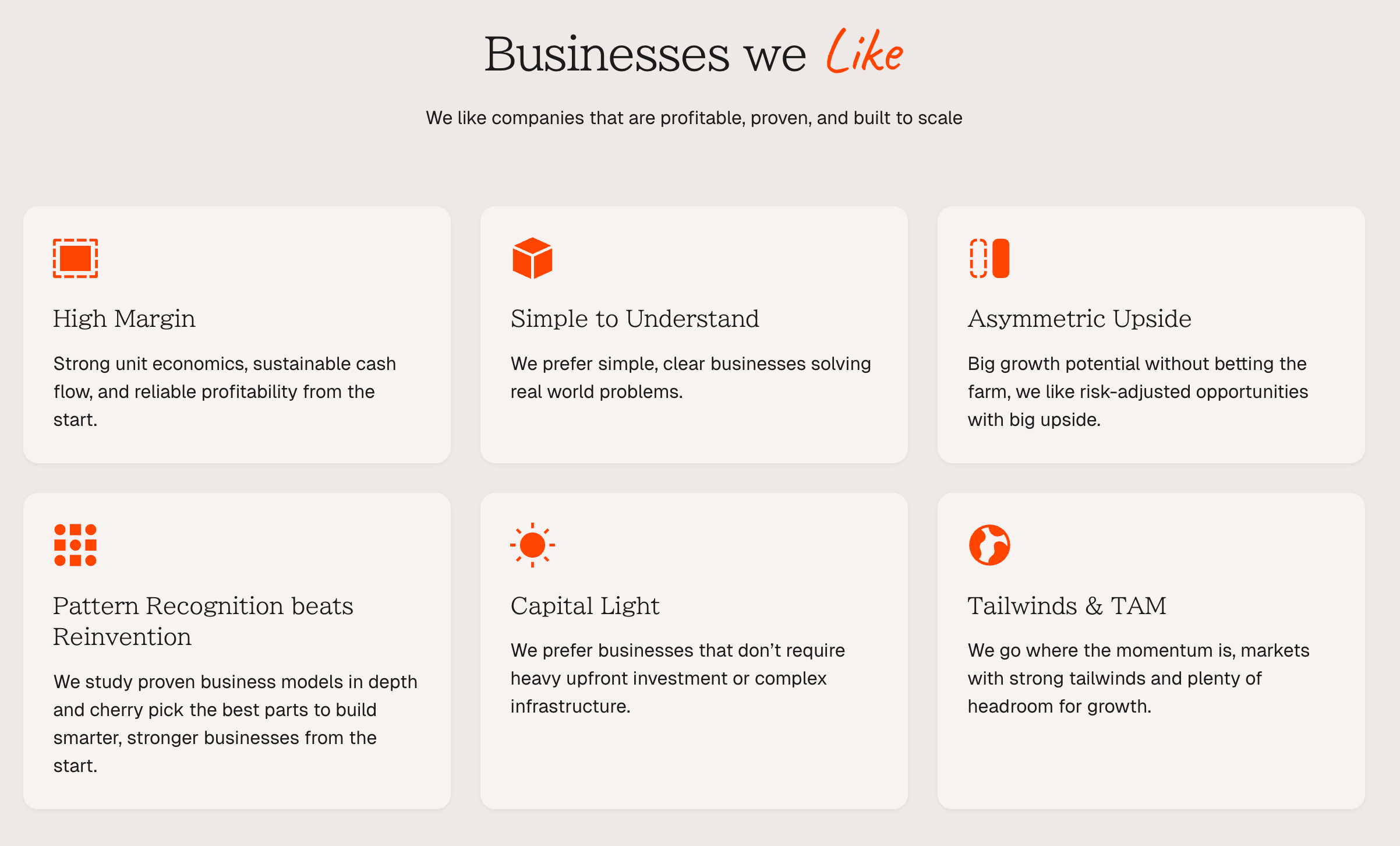
In that sense, the real product of Freedom Ventures is not a single flagship exit, but a durable portfolio that can fund a degree of personal and operational freedom - for Dave, his co-investors and the operators running each business.
For founders and investors interested in a more measured, cash-focused alternative to traditional venture, Freedom Ventures is an experiment worth watching.
My reflection:
Freedom Ventures represents a pragmatic evolution in early-stage business building (and investing), one informed by actual scars rather than theoretical models.
Dave is neither anti-venture nor romantic about bootstrapping. Instead, he applies capital strategically and sparingly, reinforces operator incentives and reserves optionality where venture often removes it.
A portfolio of five to six profitable, mutually reinforcing companies may not make headlines - but it can build real wealth, control and freedom.
And that, increasingly, looks like the smarter bet.
PS: If you are building with a seedstrapping mindset, here are 3 ways I can help:
1️⃣ Fund - We’re looking to invest $100k–$500k in 1–2 companies this quarter with Flying Founders. Let’s connect if you think we’re a good fit.
2️⃣ Learn - Want to read more stories like this and real lessons on what worked (and what didn’t) for other seedstrapped founders and investors? Subscribe to stay ahead.
3️⃣ Engage - Selling to SaaS founders? Get in front 32k+ builders across our network on Beehiiv, Substack, LinkedIn, X and Slack.